Modernizing a 20-Year-Old Air Cargo Management Platform
Peppernode designed and built a web and Android platform that wraps a 20-year-old air cargo system, extending it with new modules, integrations, and AI-assisted features without disrupting live operations.
The Client
The client is a UK-based software company that builds operational tooling for air cargo carriers around the world. Their customers — airlines and freight operators across Europe, Australia, the Middle East, and beyond — rely on this software every day to manage what moves through their airports: which flights are arriving, what cargo is on board, where it goes next. The company had a mature, deeply embedded legacy system at the center of all of this. What they needed was a team that could build around it — carefully, without touching what couldn’t be touched — and steadily extend its capabilities with modern interfaces and new modules.
The Challenge
At the center of the client’s product was the client’s legacy core — a system built over two decades, containing all customer data, cargo records, and operational logic. It worked. Their customers depended on it. But its interface was aging, and the business needed to grow around it: new modules, new users, new workflows. A full rewrite was too risky to attempt all at once.
The challenge was to build something new on top of something old — a modern product experience that could serve airport ground staff, airline administrators, and external freight partners, while remaining connected to the legacy infrastructure underneath. Every new module had to integrate with systems the client controlled, systems third parties controlled, and in some cases, systems that ran on physical servers inside the airports themselves.
Rather than replacing the legacy system, Peppernode built the new platform as a modern layer on top of it. Apache Guacamole was used to provide controlled access to the legacy system interface directly within the new platform — allowing users to reach existing data without any disruption to the underlying system. New modules were built and integrated one by one: some with backends owned by the client, some by third parties, and some fully developed by Peppernode. This modular approach meant each piece could be shipped and validated independently, keeping the live product stable while the platform grew.
- Legacy System Access via Remote Desktop Integration. Airport staff need to access decades of cargo data stored in the legacy core — a Windows Forms application with business logic too complex to simply bypass. Rather than replicating that logic or rebuilding it from scratch, Peppernode integrated remote desktop access directly into the new interface using Apache Guacamole, making the legacy system one of the platform’s modules without disrupting what was already working.
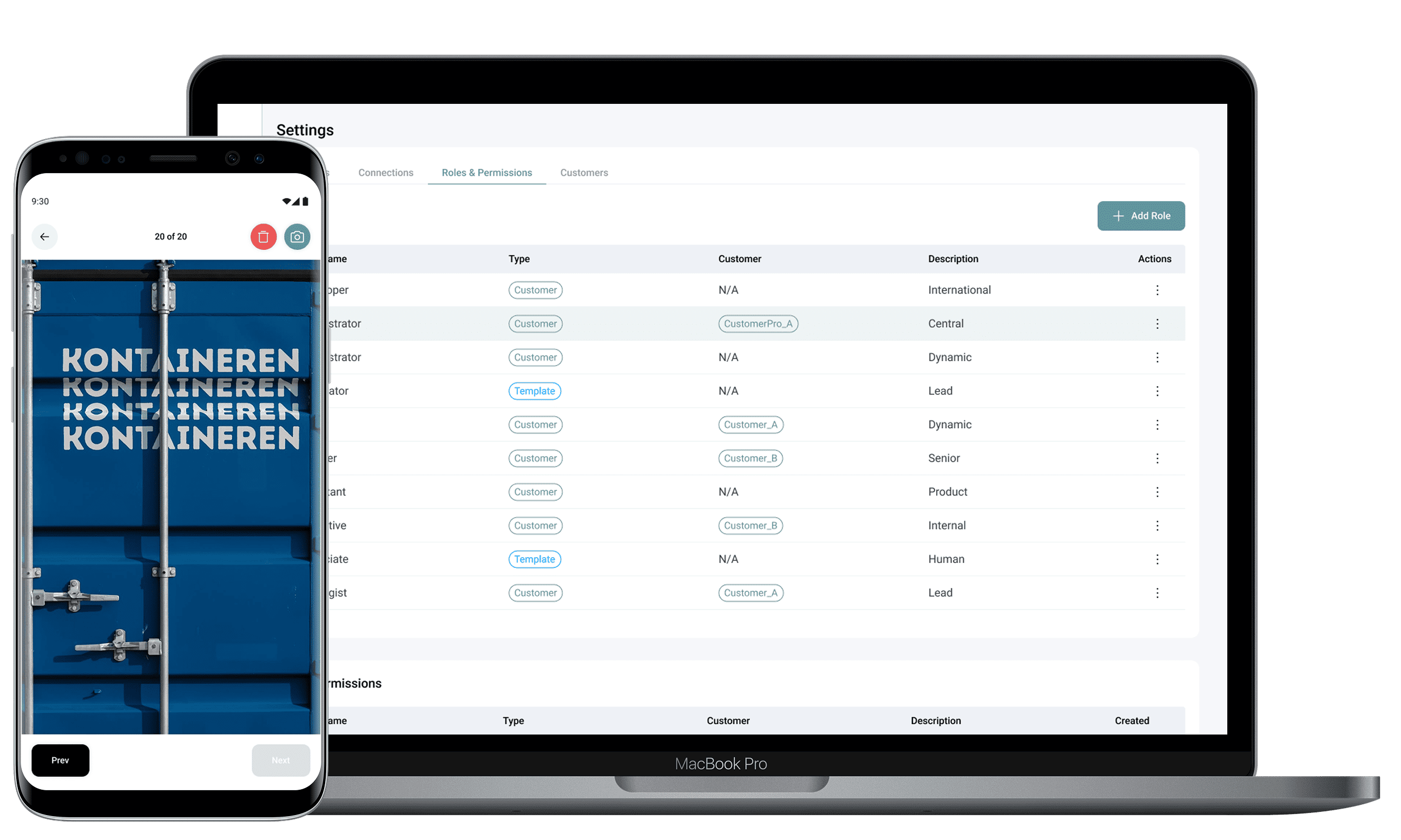
- User and Permission Management. The platform serves multiple airline customers, each operating across different airports with different staff roles. Peppernode built a full user management system that lets administrators create customers, assign users, configure roles, and control exactly which modules and legacy system connections each person can access — scoped to their organization and location.
- QR Code Login for Airport Ground Staff. Warehouse and ramp workers operate in conditions that make typing credentials impractical — gloves, handheld scanning devices, time pressure. Peppernode built a QR code generator that creates scannable login credentials for each user. Workers scan their code on a handheld device and get immediate access to the system, no keyboard required.
- AI Chat Module. An embedded chat assistant trained on the client’s own product documentation — product guides, process definitions, internal references. It gives users a fast way to get answers about the platform without leaving the interface. The model responds only within the scope of the client’s own documentation, keeping answers accurate and operationally relevant.
- Track & Trace — Cargo Shipment Tracking. A standalone web module being built for users who have no account in the platform — freight brokers, external partners, anyone who needs to track a shipment. Users log in and see the status of their cargo: airline, route, current location, customs clearance status, weight, piece count, and milestone history.
- DGR — Dangerous Goods Declaration Processing. Air cargo regulations require that dangerous goods shipments travel with detailed paper declarations. Peppernode built a module that lets operators upload a PDF declaration, uses AI to extract and structure the data from it, and presents it for human review and correction before submission to the downstream dangerous goods system. The goal is to reduce manual data entry and catch errors before they reach compliance workflows.
- Mobile Application (Android). A dedicated Android application that lives on handheld scanning devices used by airport ground crews. It connects to the legacy cargo system to surface flight data — inbound and outbound — and allows workers to scan cargo, log movements, and upload photos of damaged goods, with all data synced back to the central system.
Peppernode worked in close collaboration with the client’s internal team throughout the project. The client’s developers owned several backend systems that Peppernode’s modules integrated with, which meant regular alignment on APIs, data structures, and release timing. The PM/BA managed both the product definition and day-to-day communication, keeping delivery moving across a platform that spans web, mobile, and multiple third-party integrations.
The Solution
- 1 Project Manager / BA
- 1 Backend Developer
- 1 Frontend Developer
- 1 Mobile Developer
- 1 UI/UX Designer
- 1 QA Engineer
Rather than replacing the legacy system, Peppernode built the new platform as a modern layer on top of it. Apache Guacamole was used to provide controlled access to the legacy system interface directly within the new platform — allowing users to reach existing data without any disruption to the underlying system. New modules were built and integrated one by one: some with backends owned by the client, some by third parties, and some fully developed by Peppernode. This modular approach meant each piece could be shipped and validated independently, keeping the live product stable while the platform grew.
- Legacy System Access via Remote Desktop Integration. Airport staff need to access decades of cargo data stored in the legacy core — a Windows Forms application with business logic too complex to simply bypass. Rather than replicating that logic or rebuilding it from scratch, Peppernode integrated remote desktop access directly into the new interface using Apache Guacamole, making the legacy system one of the platform’s modules without disrupting what was already working.
- User and Permission Management. The platform serves multiple airline customers, each operating across different airports with different staff roles. Peppernode built a full user management system that lets administrators create customers, assign users, configure roles, and control exactly which modules and legacy system connections each person can access — scoped to their organization and location.
- QR Code Login for Airport Ground Staff. Warehouse and ramp workers operate in conditions that make typing credentials impractical — gloves, handheld scanning devices, time pressure. Peppernode built a QR code generator that creates scannable login credentials for each user. Workers scan their code on a handheld device and get immediate access to the system, no keyboard required.
- AI Chat Module. An embedded chat assistant trained on the client’s own product documentation — product guides, process definitions, internal references. It gives users a fast way to get answers about the platform without leaving the interface. The model responds only within the scope of the client’s own documentation, keeping answers accurate and operationally relevant.
- Track & Trace — Cargo Shipment Tracking. A standalone web module being built for users who have no account in the platform — freight brokers, external partners, anyone who needs to track a shipment. Users log in and see the status of their cargo: airline, route, current location, customs clearance status, weight, piece count, and milestone history.
- DGR — Dangerous Goods Declaration Processing. Air cargo regulations require that dangerous goods shipments travel with detailed paper declarations. Peppernode built a module that lets operators upload a PDF declaration, uses AI to extract and structure the data from it, and presents it for human review and correction before submission to the downstream dangerous goods system. The goal is to reduce manual data entry and catch errors before they reach compliance workflows.
- Mobile Application (Android). A dedicated Android application that lives on handheld scanning devices used by airport ground crews. It connects to the legacy cargo system to surface flight data — inbound and outbound — and allows workers to scan cargo, log movements, and upload photos of damaged goods, with all data synced back to the central system.
Peppernode worked in close collaboration with the client’s internal team throughout the project. The client’s developers owned several backend systems that Peppernode’s modules integrated with, which meant regular alignment on APIs, data structures, and release timing. The PM/BA managed both the product definition and day-to-day communication, keeping delivery moving across a platform that spans web, mobile, and multiple third-party integrations.

Insights From Our Team
“This logistics project is an exceptional showcase of handling complex infrastructure. Faced with a massive legacy core system, we avoided a risky, complete rewrite and instead developed a modern wrapper, seamlessly integrating it with the client’s ecosystem. By using solutions like Apache Guacamole for gradual module updates, we’ve managed to systematically upgrade the platform without disrupting ongoing business operations — marking a significant milestone in our journey toward technical excellence.”
Results & Impact
- 7 modules built or integrated across the platform
- Web platform and native Android application shipped and in active use
- QR code login, AI chat, user management, and DGR processing modules fully delivered
- Track & Trace and mobile module modernization currently in active development
- Project ongoing for 2+ years across a growing scope
- Airport staff have a modern, unified interface for cargo operations without disruption to the underlying legacy system
- Airline administrators can manage access and permissions across multiple airports and user roles without relying on the legacy system’s tooling
- External freight partners can track shipments independently, reducing the volume of manual status requests
- AI-assisted declaration processing reduces manual data entry in a high-compliance, high-stakes workflow
- The platform is architected to support gradual module-by-module migration away from the legacy core over time
- React.js
- React Native
- Expo / EAS
- Firebase
- VisionCamera
- FastAPI
- SQLAlchemy
- PostgreSQL
- Casbin
- Apache Guacamole
- AWS
Ready to Build Your Own Solution?
If your business runs on software that’s too critical to replace overnight, we know how to build around it. Peppernode helps companies extend legacy platforms with modern interfaces, new modules, and integrations — without stopping the clock on what already works.
*We sign an NDA upon request.
Reach out for a free consultation and a quote
Don't hesitate - turn your idea into a successful product!
Fill out the form, and we will get in touch with you within 24 hours.